Atmos Rewards points are worth 1.5 cents each. Alaska Airlines rebranded Mileage Plan to Atmos Rewards in August 2025, folding Hawaiian Airlines into the same program and introducing two new co-brand cards. The points carry the same structural advantages: a published partner award chart with no fuel surcharges, now extended to Hawaiian routes as well.
Here is the math behind the valuation, the redemptions that consistently beat it, and what changed with the rebrand.
The Atmos Rewards Rebrand
Alaska Airlines launched Atmos Rewards on August 20, 2025, replacing both Mileage Plan and HawaiianMiles. Existing balances in both programs converted at 1:1. If you held 50,000 Mileage Plan miles, you woke up with 50,000 Atmos Rewards points. Nothing about redemption value changed at conversion.
The meaningful additions are on the Hawaiian side. The program now covers Hawaiian Airlines routes, including inter-island flights and Hawaiian's transpacific service to Asia. For West Coast travelers, the addition of Hawaiian connectivity means more award inventory on Pacific routes within the combined program.
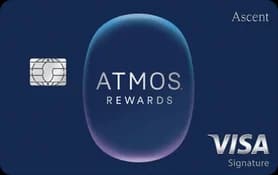
Two new credit cards launched with the rebrand: the Atmos Rewards Ascent Visa Signature and the Atmos Rewards Summit Visa Infinite, both issued by Bank of America. The old Alaska Airlines Visa Signature rolled into the Ascent for existing cardholders automatically.
What "1.5 Cents Per Point" Means
Atmos runs dynamic pricing on Alaska and Hawaiian metal and a semi-fixed award chart for partner redemptions. The 1.5-cent Supapoints valuation reflects how these two tiers average out.
On Alaska and Hawaiian-operated flights, prices flex with demand. A Seattle to Honolulu award can price as low as 10,000 points one-way or well above that at peak. Domestic Hawaii redemptions are real value when saver space is available, but the per-point ceiling is lower here than on partner awards.
On partner awards, the chart stays more predictable. That is where the ceiling lives. The 1.5-cent figure blends three buckets:
- Partner premium cabins on Cathay Pacific, Japan Airlines, British Airways, and Qantas regularly deliver 1.8 to 2.5 cents per point.
- Alaska and Hawaiian Saver economy on Hawaii routes lands around 1.3 to 1.6 cents when saver space is open.
- Non-flight uses including gift cards and the Miles + Cash option fall to 0.5 to 0.9 cents per point.
The Supapoints points valuation uses 1.5 cents as the planning figure for any earning calculation involving Atmos Rewards.
How Atmos Points Compare to Other Programs
| Currency | Supapoints Value | Strongest Use |
|---|---|---|
| Atmos Rewards | 1.5¢ | Partner premium cabins, no fuel surcharges |
| American AAdvantage | 1.5¢ | Oneworld partner business and first class |
| Air Canada Aeroplan | 1.5¢ | Star Alliance partners, no fuel surcharges |
| Southwest Rapid Rewards | 1.5¢ | Flat-rate domestic economy |
| United MileagePlus | 1.3¢ | Star Alliance Saver awards |
| Delta SkyMiles | 1.2¢ | Domestic Delta economy |
Atmos ties at the top of the valuation table. The key structural difference from AAdvantage and Aeroplan is earning: neither Chase, Amex, Citi, nor Capital One transfers into Atmos. Building a balance takes more deliberate effort here than with the programs that accept flexible currency transfers from multiple banks.
The No-Fuel-Surcharge Advantage
Every major airline loyalty program deals with fuel surcharges differently. Most pass them through. Atmos does not.
On any Atmos Rewards partner award, you pay government-mandated airport taxes only. That typically runs $20 to $60 on international itineraries regardless of the airline or cabin. Compare that to the $400 to $700 in carrier-imposed fees that British Airways charges on many of its routes, which Avios holders absorb in full alongside the points cost.
A British Airways Club World seat to London that costs Avios holders $600 in fees costs an Atmos holder under $50. The mileage prices are similar. The net cost is not.
This advantage applies across the full Atmos partner list, which now includes Cathay Pacific, Japan Airlines, British Airways, Qatar Airways, Qantas, Finnair, Singapore Airlines, Korean Air, and several others. No fuel surcharges on any of them.
The Strongest Atmos Redemptions
Cathay Pacific Business and First Class to Asia are the consistent top performers. The award chart prices Cathay Business from North America to Hong Kong around 75,000 points one-way, and Cathay First around 70,000 points. Both deliver well above the 1.5-cent planning valuation against the cash fares, which regularly run $3,000 to $8,000 depending on the cabin and date.
Japan Airlines Business to Tokyo prices in a similar range, roughly 60,000 to 85,000 points one-way from the US West Coast. JAL's business cabin is one of the most consistent products in the sky. The combination of award chart pricing, no fuel surcharges, and reliable seat availability makes this one of the most cited sweet spots among Atmos Rewards redemptions.
British Airways Club World to London is worth calling out specifically because of the surcharge math. The award prices in the 55,000 to 70,000 point range, and with no surcharges, the total out-of-pocket cost is under $100 in fees for a business class transatlantic flight. That is the arbitrage Atmos holders have against Avios holders booking the same seats.
Qantas Business to Australia is another strong option at around 55,000 points one-way, with good availability and a competitive product on the Melbourne and Sydney routes.
One program feature worth knowing: Atmos allows a free stopover on partner award tickets. You can book a routing like Los Angeles to Hong Kong (stopover for several days) to Singapore on a single Cathay award at one price instead of two separate tickets. That extends the effective value of a single points expenditure considerably for anyone willing to build a trip around it.
How to Earn Atmos Points
Amex, Chase, Citi, and Capital One all have no transfer path into Atmos Rewards. This is the program's structural limitation, and it shapes how a balance gets built.
Bilt Rewards transfers to Atmos at 1:1, with transfers typically processing in minutes. For anyone who pays rent and earns Bilt points on it, Bilt is the only flexible currency with a direct path into Atmos.
Marriott Bonvoy transfers at 3:1, with a 5,000-point bonus on every 60,000-point block, yielding 25,000 Atmos points. That is not an efficient ratio for most Marriott holders, but it provides a conversion path for someone with a large idle Marriott balance and a specific award in mind.
The two co-brand cards are the primary earning vehicle for everyone else.
The Atmos Rewards Ascent carries a $95 annual fee and earns 3x on Alaska and Hawaiian Airlines purchases, 2x on gas, EV charging, cable, streaming services, and local transit (including rideshare), and 1x everywhere else. Cardholders who spend $6,000 in a year receive a $99 companion fare valid on Alaska and Hawaiian saver and main cabin flights within North America. First checked bag is free for the cardholder and up to six companions on the same booking. For a regular Alaska or Hawaiian flyer, the companion fare and bag benefit typically cover the annual fee in a single trip.
The Atmos Rewards Summit is the premium card, earning 3x on dining, foreign transactions, and Alaska and Hawaiian purchases, and 1x elsewhere. It comes with a 25,000-point companion award each anniversary year (valid on partner airlines in any cabin class, including business and first), eight Alaska lounge passes per year distributed as two per calendar quarter, and a $120 credit toward TSA PreCheck or Global Entry every four years. The Summit also earns one status point per $2 spent with no cap, which accelerates Atmos elite qualification.
For a broader look at travel card options, including flexible-currency cards that transfer across multiple programs, see the best travel credit cards guide.
The Worst Uses of Atmos Points
Gift cards, merchandise, and the Miles + Cash option on paid fares consistently return 0.5 to 0.7 cents per point. These are the equivalent of cashing out at a 66% discount from the Supapoints valuation.
Using points on Alaska or Hawaiian metal at peak dynamic pricing can also underperform. A 25,000-point redemption against a $200 cash fare delivers under 1 cent per point and does not reflect what the program is actually designed for. The value lives in the partner chart. Any redemption on Alaska or Hawaiian metal is worth a quick comparison against the cash fare before committing.
Bottom Line
Atmos Rewards points are worth 1.5 cents each when used for partner premium cabin travel, with Cathay Pacific, Japan Airlines, British Airways, and Qantas as the consistent top performers. The no-fuel-surcharge policy and the free stopover benefit are genuine structural advantages that most programs cannot match.
The program works best for people who either fly Alaska or Hawaiian regularly and accumulate points through flying, or hold one of the co-brand cards and use the companion benefit. Bilt Rewards provides the one flexible-currency transfer path for anyone who pays rent. If your spending patterns skew toward programs with broader transfer partnerships, the Card Advisor can show which currency gives you the most routing flexibility when the time comes to book.