

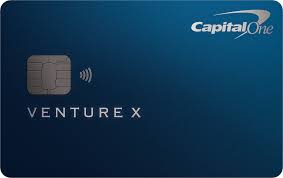
Capital One miles redeem at 1 cent each against any travel purchase through the portal. The same miles transfer to airline partners where one mile can be worth two cents or more on premium-cabin awards. The gap between the worst and best redemption is roughly 4x, and it determines whether the Venture X is a $395 cashback card in disguise or one of the most efficient travel currencies in the market.
Here are the redemptions that actually move the needle, the transfer partners where Capital One miles outperform other transferable currencies, and the uses to avoid.
Two Ways to Redeem Capital One Miles
Capital One offers two distinct redemption paths, and they are not equivalent in value.
The first is to erase a travel purchase. Pay for any travel charge with your Venture X or Venture, then apply miles to wipe it from your statement. Any merchant coded as travel works: airlines, hotels, rental cars, Airbnb, Uber, parking. The redemption rate is fixed at 1 cent per mile. This is the simplest path and the one most people default to.
The second is to transfer miles to an airline or hotel partner. Move miles to one of more than 15 partner programs at a 1:1 ratio and book the award directly with the partner. Cents-per-mile value depends entirely on the redemption, but premium-cabin transatlantic and transpacific awards routinely deliver 2 to 5 cents per mile.
The gap between these two paths is the entire game. Supapoints values Capital One miles at 1.85 cents per mile on the assumption that you transfer thoughtfully, not that every redemption hits 1 cent.
The Transfer Partner Sweet Spots
Capital One's network covers all three major airline alliances plus several hotel programs. Five partners do most of the heavy lifting:
| Partner | Ratio | Best For |
|---|---|---|
| Turkish Airlines Miles&Smiles | 1:1 | Domestic United flights at 7,500 miles one-way |
| Avianca LifeMiles | 1:1 | Star Alliance premium cabins to Europe and South America |
| Air France/KLM Flying Blue | 1:1 | Monthly Promo Awards on transatlantic flights |
| Cathay Pacific Asia Miles | 1:1 | Oneworld business class to Asia |
| Air Canada Aeroplan | 1:1 | Star Alliance partner awards with no fuel surcharges |
Turkish Miles&Smiles is the single strongest partner for domestic redemptions. United operates as a Star Alliance partner of Turkish, and Turkish prices United domestic economy at 7,500 miles one-way and business at 12,500. The same itinerary often costs 12,500 to 25,000 United MileagePlus miles directly. Award space is the constraint: Turkish only sees Saver-level United seats, and booking requires phoning Turkish's call center.
Avianca LifeMiles opens up premium-cabin Star Alliance redemptions at lower rates than United charges. Business class to Europe is around 63,000 miles one-way on partners like Lufthansa, SWISS, or Brussels Airlines. Avianca also runs periodic mile sales offering up to 25 percent off transfers, which effectively turns a 1.85-cent Capital One mile into a 2.3-cent one once it lands at LifeMiles.
Air France/KLM Flying Blue runs Promo Awards every month, discounting select transatlantic routes by 25 to 50 percent. A Promo Award business class seat from the East Coast to Paris or Amsterdam at 30,000 to 35,000 miles is one of the highest-value redemptions on a 1:1 transferable currency anywhere in the market.
Cathay Asia Miles prices oneworld business class to Asia aggressively. Hong Kong from the West Coast on Cathay's own metal runs about 75,000 miles one-way in business. American AAdvantage charges 70,000 to 100,000 for the same flight, and JAL or Cathay Saver award space is more reliable through Asia Miles.
Air Canada Aeroplan is the cleanest Star Alliance redemption on the list because Aeroplan does not pass fuel surcharges through on most partners. United, Air Canada, and ANA business class to Europe books at 60,000 to 87,500 Aeroplan miles with under $50 in taxes.
When the Travel Portal Beats Transfer
The 1-cent portal redemption is not always the wrong move. It wins in three situations.
Short-haul economy where the cash price is reasonable. A $200 domestic flight at 20,000 miles is comparable to a transfer to Aeroplan that costs 12,500 miles, once you factor in Aeroplan's $40 in taxes and the time spent searching for award space. Anything under roughly $300 in cash, the portal usually wins on simplicity.
Hotels under $200 per night where points are not the issue. Wyndham Rewards transfers do not help much for chain hotels; the portal redemption against a budget hotel cash price is faster and locks in equivalent value.
When the alternative is a worse mileage program. Transferring to a poor-value partner just to "use transfers" is the same trap as cashing out at the gift card rate. Use the portal instead.
The Worst Uses of Capital One Miles
Several common redemptions destroy 50 to 70 percent of your miles' value.
Gift cards and merchandise through the Capital One Rewards portal price miles at roughly 0.5 to 0.8 cents each. A $50 gift card costs 7,000 to 10,000 miles depending on the brand. The same miles erase a $70 to $100 travel purchase if applied through the travel option.
Statement credit on non-travel purchases redeems at 0.5 cents per mile, half the rate of the travel statement credit. The Capital One app makes this distinction easy to miss in the redemption flow.
Amazon Shop with Points has historically priced Capital One miles below 1 cent each at Amazon checkout. The exact rate fluctuates, but the redemption has consistently been one of the worst.
The pattern is consistent: anything that is not a travel statement credit or a transfer to an airline or hotel partner is almost certainly a low-value redemption.
Cards That Earn Capital One Miles
Two cards in the lineup earn transferable Capital One miles.
The Capital One Venture X is the flagship at $395 annual fee. It earns 2x miles on everything, 5x on flights via Capital One Travel, 10x on hotels and rental cars via the portal, plus a $300 annual travel credit and 10,000 anniversary bonus miles. The full benefit breakdown is in the Venture X benefits guide.
The Capital One Venture is the lower-tier option at $95 annual fee. It earns 2x on everything and 5x on hotels and rental cars via Capital One Travel. There is no annual travel credit and no anniversary bonus, but the redemption mechanics and transfer partner list are identical to the Venture X.
Capital One does not have a transferable-miles category card for dining or groceries; the SavorOne earns cash back rather than miles. Most points-and-miles users pair the Venture X with a category card from another issuer for non-portal everyday spend.
Capital One Lounge Access
Holding the Venture X also unlocks Capital One Lounge access at Washington Dulles, Denver, and Dallas Fort Worth, plus Priority Pass Select coverage at 1,300+ lounges worldwide. The Capital One lounges sit a tier above typical Priority Pass spaces in food quality and seating density.
If lounge access factors into how you plan award itineraries, see the credit card lounge access guide for the broader breakdown of which cards include which programs.
How to Maximize Capital One Miles
The framework that consistently produces the highest realized cents per mile is straightforward:
- Default to the travel portal for short-haul economy under $300 cash.
- Transfer to an airline partner for any premium-cabin international redemption.
- Stack with Avianca or Flying Blue promotions when timing permits.
- Avoid gift cards, merchandise, and Amazon checkout entirely.
Bottom Line
Capital One miles are the strongest mid-tier transferable currency for a cardholder willing to learn one or two transfer partners. Defaulted to the portal at 1 cent per mile, they perform like any 2 percent cashback program; you would earn a similar effective return from a no-fee flat-rate card.
The math only works at the 1.85-cent valuation if you actually transfer. For anyone planning to pay cash for international travel anyway, that translation is worth the 30 minutes it takes to learn.