Supapoints values American AAdvantage miles at 1.5 cents each. That puts AAdvantage at the top of the airline-mile pack alongside Aeroplan and Alaska, ahead of United at 1.3 cents and Delta at 1.2 cents. The valuation is a planning number, not a guaranteed return. A oneworld partner business class award can clear 2.5 cents per mile, while an AAdvantage eShopping gift-card redemption can sink below 0.7 cents.
Here is the math behind the 1.5-cent valuation, the redemptions that consistently beat it, and the reason AAdvantage is harder to earn than most major currencies.
What "1.5 Cents Per Mile" Actually Means
American runs dynamic award pricing on its own flights. A Dallas to Chicago seat might cost 7,500 miles as a web special or 25,000 miles at peak, depending on the date and demand. That spread is why a single average can mislead.
The 1.5-cent figure reflects three patterns we see consistently across redemptions:
- Oneworld partner awards in business and first class typically clear 1.8 to 2.5 cents per mile.
- Web specials and Saver economy on American metal land near 1.3 to 1.6 cents per mile when they appear.
- Peak dynamic pricing, last-minute domestic bookings, and non-flight uses pull the average down to roughly 0.7 to 1.0 cents.
Mix those three with reasonable weighting and the central tendency lands at 1.5 cents per mile. That is the Supapoints points valuation for AAdvantage and the number used in every earning calculation across the site.
How AAdvantage Compares to Other Airline Miles
AAdvantage sits at the top of the major US airline programs, though the gap between best and worst is smaller than people assume.
| Currency | Supapoints Value | Best Use |
|---|---|---|
| American AAdvantage | 1.5¢ | Oneworld partner business class on JAL, Cathay, Qatar |
| Air Canada Aeroplan | 1.5¢ | Star Alliance partner premium with no fuel surcharges |
| Alaska Mileage Plan | 1.5¢ | Partner premium cabins and Hawaii flights |
| United MileagePlus | 1.3¢ | Star Alliance Saver awards and partner premiums |
| Delta SkyMiles | 1.2¢ | Domestic Delta economy and Delta-operated long-haul |
| Southwest Rapid Rewards | 1.5¢ | Flat-rate domestic economy bookings |
AAdvantage earns its top-tier value from oneworld. The alliance includes Japan Airlines, Cathay Pacific, Qatar Airways, British Airways, and Qantas, several of which run the most respected premium cabins in the sky. American keeps a published award chart for partner flights even after moving its own metal to dynamic pricing, which is what protects the high-value redemptions.
The Strongest AAdvantage Redemptions
Oneworld partner business and first class is the single strongest category. Japan Airlines business to Tokyo prices around 60,000 miles one-way off-peak against cash fares of $3,000 to $4,500, Cathay Pacific business to Hong Kong runs near 70,000 miles, and Qatar Airways Qsuite to Doha books around 70,000 miles. Those awards land at 1.8 to 2.5 cents on the Supapoints valuation and far higher against the cash fare, because American prices partner flights off a fixed chart rather than dynamically.
Domestic value is thinner but real. American releases web specials on its own flights that occasionally drop below 7,500 miles one-way in economy, and the A321T Flagship First cabin between New York JFK and the West Coast can beat a $1,500 paid fare on off-peak dates.
For the full process, including how to search partner space on aa.com, which partners require a phone booking, and the fuel-surcharge routes to avoid, see how to redeem AAdvantage miles.
How to Earn AAdvantage Miles
For years AAdvantage was one of the hardest premium currencies to build through credit card points, because it sat outside every major transferable program. That changed in 2026. Citi ThankYou Points now transfer to AAdvantage, and Citi is the only credit card issuer with a direct partnership. Premium cards like the Citi Strata Premier transfer at 1:1, while Citi's no-annual-fee cards transfer at a reduced ratio. American Express, Chase, and Capital One still do not transfer to AAdvantage.
Two other flexible currencies feed it. Bilt Rewards transfers 1:1, and Marriott Bonvoy transfers at roughly 3:1. Beyond transfers, the co-brand cards earn AAdvantage directly.
The AAdvantage MileUp is the entry point at no annual fee, earning 2x at US grocery stores and 2x on American Airlines purchases. It is a clean parking spot for occasional American flyers who want to keep a balance active and avoid the 24-month expiration.
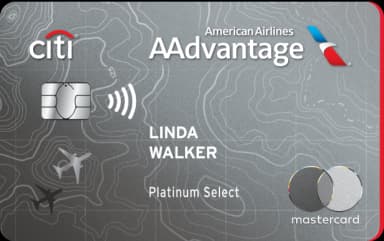
The AAdvantage Platinum Select sits at $99 per year, waived the first year, and earns 2x on American purchases, dining, and gas. It adds a first checked bag free and preferred boarding, which pays for the fee quickly for anyone checking a bag on two or more round trips a year.
The AAdvantage Executive at $595 per year is the premium option, earning 4x on American purchases and including full Admirals Club membership, a Global Entry or TSA PreCheck credit, and first checked bag free for the cardholder and up to eight companions. The math works for travelers who would otherwise pay for Admirals Club access on its own.
The Worst Uses of AAdvantage Miles
The program offers several non-flight redemptions that destroy value relative to award flights.
Gift cards, merchandise, and magazine subscriptions through the AAdvantage shopping channels return roughly 0.5 to 0.8 cents per mile. The same applies to the Cash and Miles option at checkout, which applies a fixed low rate against a cash fare and rarely benefits someone holding miles for travel.
Using miles toward seat upgrades on paid economy tickets typically falls below 1 cent per mile, and upgrade awards on American often require a copay on top of the miles. Award flights on partners with high fuel surcharges, particularly British Airways out of London, can carry several hundred dollars in cash taxes alongside the mileage cost, which shrinks the effective value considerably even when the award price looks reasonable.
Should You Hold an AA Co-Brand Card?
The decision comes down to how often you fly American and whether you value Admirals Club access. If you take fewer than three American flights a year and rarely check a bag, the no-fee MileUp is enough to keep miles active and earn on groceries. The Platinum Select pays for itself once the free checked bag gets used on a couple of round trips.
The Executive only pencils out for frequent American flyers who would otherwise buy lounge access. If you want lounge benefits and are weighing it against the equivalent United option, the AAdvantage Executive vs United Club comparison breaks down which premium co-brand fits which traveler.
The Card Advisor can rank the AAdvantage co-brands against transferable-currency cards based on your actual spending and flight patterns. And if you do carry one of these cards, the Supapoints Benefit Tracker keeps the checked-bag perk, the Global Entry credit, and the Admirals Club enrollment from sliding past their reset dates.
Bottom Line
AAdvantage miles are worth roughly 1.5 cents each when redeemed thoughtfully, with oneworld partner business class as the clear ceiling. The catch is earning them, since AAdvantage sits outside every major transferable-points program except Bilt and Marriott. Treat them as a flight currency, keep the account active to dodge the 24-month expiration, and the value holds up against any airline program.
If you fly American regularly, the Platinum Select or Executive earns miles faster than any indirect path. If you fly American only occasionally, the no-fee MileUp paired with the odd Bilt or Marriott transfer is the smarter way to reach a redemption without paying a premium annual fee.