Supapoints values United MileagePlus miles at 1.3 cents each. That puts United in the middle of the airline-mile pack: below American AAdvantage at 1.5 cents and Aeroplan at 1.5 cents, but ahead of Delta SkyMiles at 1.2 cents. The valuation is a planning number, not a guaranteed return. A well-timed Saver award on a Star Alliance partner can clear 2 cents per mile, while a MileagePlus shopping portal redemption can sink below 0.7 cents.
Here is the math behind the 1.3-cent valuation, the redemptions that consistently beat it, and the uses to avoid.
What "1.3 Cents Per Mile" Actually Means
United runs dynamic award pricing on its own flights. The same Newark to San Francisco flight might cost 12,500 miles at Saver pricing or 50,000 miles at peak, depending on the date and load factor. That spread is why a single average valuation can be misleading.
The 1.3-cent figure reflects three patterns we see consistently across redemptions:
- Partner Saver awards on Star Alliance carriers typically clear 1.8 to 2.5 cents per mile in premium cabins.
- Saver economy on United metal lands near 1.2 to 1.5 cents per mile when award space is available.
- Peak United redemptions, last-minute domestic bookings, and non-flight uses pull the average down to roughly 0.8 to 1.0 cents.
Mix those three with reasonable weighting and the central tendency lands at 1.3 cents per mile. That is the Supapoints points valuation for MileagePlus and the number used in any earning calculation across the site.
How United Compares to Other Airline Miles
United sits in the middle of the major US airline programs. The gap between best and worst is smaller than people assume.
| Currency | Supapoints Value | Best Use |
|---|---|---|
| American AAdvantage | 1.5¢ | Partner business class on JAL, Cathay, Qatar |
| Air Canada Aeroplan | 1.5¢ | Star Alliance partner premium with no fuel surcharges |
| Alaska Mileage Plan | 1.5¢ | Partner premium cabins and Hawaii flights |
| United MileagePlus | 1.3¢ | Star Alliance Saver awards and partner premiums |
| Delta SkyMiles | 1.2¢ | Domestic Delta economy and Delta-operated long-haul |
| Southwest Rapid Rewards | 1.5¢ | Flat-rate domestic economy bookings |
United's 1.3-cent value is not the highest, but the program's redemption catalog is broader than any single competitor. Star Alliance has 25 member airlines, more than any other alliance, which means more partner award space and more departure-city options from any given home airport.
The Strongest United Redemptions
A handful of routes and partners consistently produce the best value per mile.
Star Alliance Partner Business Class
The single strongest category. Star Alliance partner business class to Europe from the East Coast typically prices at 88,000 miles one-way on United's award chart. Lufthansa, SWISS, Brussels Airlines, Austrian, and TAP all participate, and award space appears regularly outside peak summer dates. At a cash price of $3,500 to $5,500 for the same seat, you are landing at 4 to 6 cents per mile on the cash comparison and 1.8 to 2.5 cents on the Supapoints valuation. ANA first and business class to Japan books at 110,000 to 121,000 miles in business and is among the most respected long-haul products in the world.
Short-Haul Partner Awards
Air Canada Express, Avianca, and Copa operate short routes that price at 8,000 to 12,500 MileagePlus miles at Saver level. These work well for connection trips through Toronto, Bogotá, or Panama City when cash prices are inflated. Domestic Hawaii flights on United metal also fall here, typically 22,500 to 35,000 miles one-way at Saver in economy.
Excursionist Perk on Multi-Stop Itineraries
The Excursionist Perk adds a free one-way segment within certain award regions when it falls between the outbound and return of an international award. Used on a Europe trip, it lets you add an intra-Europe segment at zero additional miles. Properly stacked, the perk meaningfully raises the realized cents-per-mile on a long itinerary, often by 15 to 25 percent.
When United Itself Beats Partners
Partner awards are not always the right move. Three situations favor staying on United metal.
Short-notice domestic travel where partner inventory is empty. Star Alliance partners do not always release Saver space close to departure, while United itself often does at slightly higher mile pricing.
Last-seat availability through United's dynamic pricing. United releases additional award seats as departure nears, but at non-Saver prices. If cash on the same flight is over $400, those non-Saver redemptions still clear 1.0 to 1.3 cents.
Polaris business class on United metal between US hubs and Europe. United runs Polaris cabin on most transatlantic routes, and Saver Polaris awards from Newark, Washington, or Chicago to Frankfurt, Munich, or London price at 70,000 to 88,000 miles one-way, with reliable availability outside peak weeks.
The Worst Uses of United Miles
The MileagePlus program offers several non-flight redemptions that destroy value relative to award flights.
The MileagePlus X shopping portal and Award Accelerator return roughly 0.5 to 0.7 cents per mile. The same applies to gift card redemptions and magazine subscriptions through the MileagePlus catalog. These exist as cash-out options for cardholders with no travel use case, but the trade is severe.
Using miles to pay for seat upgrades, premium economy bumps, or in-flight Wi-Fi typically falls below 1 cent per mile. United's "Pay with Miles" feature applies a fixed 1-cent-per-mile rate against any United cash fare, which makes it predictable but rarely the best path for someone holding miles for travel.
Award flights on partners with high fuel surcharges, particularly Lufthansa first class out of Frankfurt, can carry $700 to $1,200 in cash taxes alongside the mileage cost. The award itself prices well, but the cash component shrinks the effective cents per mile considerably.
How to Earn United Miles
Four cards earn MileagePlus miles directly, and two transferable currencies move into the program 1:1.
The United Gateway is the entry point at no annual fee, earning 2x on United purchases, dining, and gas. No checked-bag benefit and no lounge access, but the lack of an annual fee makes it a clean parking spot for occasional United flyers.
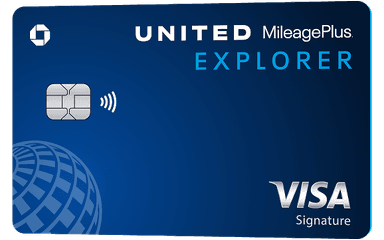
The United Explorer sits at $150 per year and adds first checked bag free, 2 United Club one-time passes annually, and priority boarding. The card waives the fee for the first year.
The United Quest at $250 per year earns 3x on United and Chase Travel hotels and cars, includes a $125 annual United credit, reimburses Global Entry or TSA PreCheck, and covers two checked bags. The credit closes most of the fee gap if you book at least one paid United flight per year.
The United Club Card at $525 per year is the only US co-brand that includes full United Club membership. The math works for cardholders who would otherwise pay $650 to $750 for standalone Club access.
Two flexible currencies also feed MileagePlus. Chase Ultimate Rewards transfers 1:1 from cards like the Sapphire Preferred and Sapphire Reserve, and Bilt Rewards transfers 1:1 from rent-paying cardholders. These are the practical paths to MileagePlus miles without holding a United co-brand.
For a full side-by-side on fees, earning rates, and benefits, see best United credit card: Gateway vs. Explorer vs. Quest vs. Club.
Should You Hold a United Co-Brand Card?
The decision comes down to flight frequency and checked-bag use. If you take fewer than three United flights per year and rarely check bags, the Gateway is enough. The premium cards only pencil out when the checked-bag savings, lounge access, or annual credit each get used multiple times per year.
For cardholders who already carry a Sapphire Preferred or Sapphire Reserve, the Chase transfer relationship covers most MileagePlus earning needs. A second airline co-brand is harder to justify when 1x United earning is already available through Ultimate Rewards transfers and Chase's broader earning categories work harder on everyday spend.
The Card Advisor can rank United co-brands against transferable-currency alternatives based on your actual spending and flight patterns. If you also carry a Delta card and are choosing between airline ecosystems, the Delta Reserve vs United Club comparison breaks down which premium co-brand fits which traveler.
If you hold any of the United co-brands, the Supapoints Benefit Tracker keeps the $125 Quest credit, Club passes, and Global Entry reimbursement from sliding past their reset dates.
Bottom Line
United miles are worth roughly 1.3 cents each when redeemed thoughtfully. The 2-cent ceiling on Star Alliance partner business class is real, but it requires advance planning and flexibility on dates. Treat them as a flight currency, not a cash-equivalent, and the value holds up.
If you fly United fewer than three times a year, a transferable-currency card paired with strategic Chase or Bilt transfers will out-earn any single United co-brand. If you fly United regularly and want lounge access or free checked bags, the Quest or Club card pays for itself on benefits alone.