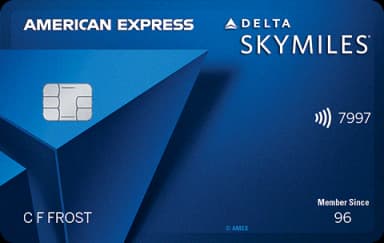
Supapoints values Delta SkyMiles at 1.2 cents each, the lowest figure among major U.S. airline currencies. American AAdvantage and Alaska Mileage Plan both sit at 1.5 cents, United MileagePlus at 1.3 cents. The gap is not an accident. Delta removed its published award chart years ago and prices every seat dynamically against the cash fare, which caps how far ahead of the cash price a redemption can ever get.
That does not make SkyMiles bad. It makes them a different kind of currency: predictable, always available, and almost never spectacular. Here is the math behind 1.2 cents, the redemptions that beat it, and the ones that cost you money.
What Dynamic Pricing Does to the Valuation
Delta has no regional award chart. An Atlanta to Los Angeles ticket that costs $220 in cash will price near 18,000 SkyMiles. The same route on a holiday weekend at $650 in cash will price near 55,000. The mileage cost tracks the fare, so the cents-per-mile return stays roughly flat no matter when you book.
That mechanical link produces a tight distribution around 1.1 to 1.3 cents on Delta-operated flights. Three patterns set the boundaries:
- Delta SkyMiles flash sales, which appear a few times a year on specific routes, clear 1.6 to 2.2 cents per mile.
- Standard Delta-operated Main Cabin and Comfort+ awards land at 1.1 to 1.3 cents, the bulk of all redemptions.
- Pay with Miles, gift cards, and Marketplace merchandise pull the floor down to 0.6 to 1.0 cents.
Weight those by how often each actually gets used and the center of the distribution is 1.2 cents. That is the Supapoints points valuation for SkyMiles and the number used in every earning calculation on the site.
How Delta Compares to Other Airline Programs
SkyMiles sits at the bottom of the U.S. airline table, but the spread across programs is narrower than the reputation gap suggests.
| Currency | Supapoints Value | Award Chart | Best Use |
|---|---|---|---|
| American AAdvantage | 1.5¢ | Published partner chart | Partner business class on JAL, Cathay, Qatar |
| Alaska Mileage Plan | 1.5¢ | Published partner chart | Partner premium cabins and Hawaii |
| Southwest Rapid Rewards | 1.5¢ | Revenue-linked, fixed rate | Flat-rate domestic economy |
| Air Canada Aeroplan | 1.5¢ | Published distance chart | Star Alliance premium, no fuel surcharges |
| United MileagePlus | 1.3¢ | Partner chart only | Star Alliance Saver awards |
| Delta SkyMiles | 1.2¢ | None | Partner awards, flash sales, Delta One deals |
The absence of an award chart is the single line in that table that explains the ranking. Every program above Delta lets you find a seat that is mispriced relative to cash. Delta closed that door deliberately, and the valuation reflects it.
What Delta gives back is reliability. Every seat on every Delta flight is bookable with miles, and Delta does not pass carrier-imposed surcharges through on its own awards. There is no hunting for Saver space, no phantom availability, and no calling an agent to book a partner segment.
The Redemptions That Beat 1.2 Cents
Three categories consistently outperform the baseline.
Partner Awards on Virgin Atlantic, Air France-KLM, and Korean Air
Delta's SkyTeam and joint-venture partners are where the real value sits. Virgin Atlantic Upper Class between the U.S. East Coast and London prices in the 60,000 to 90,000 SkyMiles range one-way, against cash fares that regularly exceed $3,000. Air France and KLM business class to Paris or Amsterdam prices similarly. Korean Air awards to Seoul are among the strongest in the program.
These bookings clear 1.8 to 2.5 cents per mile on the Supapoints valuation. The constraint is that partner space is not always visible on delta.com, and the best fares appear well outside peak travel weeks.
Delta One Transatlantic Deals
Delta releases Delta One award pricing on transatlantic routes several times a year at levels far below the cash equivalent. Boston, New York, and Atlanta to European hubs have priced in the 70,000 to 100,000 SkyMiles range one-way against $4,000 cash fares. Those specific windows are the highest-value redemptions available on Delta metal.
SkyMiles Deals on Domestic Economy
Delta publishes a rotating "SkyMiles Deals" set of domestic routes priced from roughly 8,000 miles round-trip. On a $180 to $250 cash fare, that clears 2 cents or better. The routes are limited and the dates are fixed, but for a flexible traveler these are the most consistent above-average redemptions in the program.
The Uses That Destroy Value
Pay with Miles is the most common trap. It applies SkyMiles against any Delta cash fare in $50 increments at a flat 1 cent per mile, requires an Amex Delta co-brand card, and is available on every fare. The convenience is real and the return is below the 1.2-cent baseline on every single transaction.
SkyMiles Marketplace merchandise, gift cards, and magazine subscriptions return roughly 0.6 to 0.8 cents per mile. Using miles for seat upgrades on paid tickets and for Delta Sky Club day passes falls in the same band.
The one nuance worth flagging: Delta Sky Club day passes are no longer purchasable with miles for most travelers, and the airline has tightened Club entry rules repeatedly since 2023. If lounge access is the goal, the card benefit is the path, not a mileage redemption. For which cards actually get you in the door, see the credit card airport lounge access guide.
How to Earn Delta SkyMiles
Four Amex co-brand cards earn SkyMiles directly, and Membership Rewards transfers in 1:1.
| Card | Annual Fee | Delta Earning | Headline Benefit |
|---|---|---|---|
| Delta SkyMiles Blue | $0 | 2x | 2x on dining and U.S. supermarkets |
| Delta SkyMiles Gold | $150 (waived year 1) | 2x | First checked bag free |
| Delta SkyMiles Platinum | $350 | 3x | Annual Main Cabin companion certificate |
| Delta SkyMiles Reserve | $650 | 3x | Sky Club access, First Class companion certificate |
The Delta SkyMiles Platinum carries $120 in annual Resy dining credits, $120 in rideshare credits, and a $150 Delta Stays credit, plus a $200 Delta flight credit that unlocks only after $10,000 in calendar-year spend. The Delta SkyMiles Reserve carries $240 in Resy credits and $120 in rideshare credits alongside unlimited Sky Club access on Delta-ticketed flights.
The companion certificate is what carries both premium cards. The Platinum certificate covers a Main Cabin domestic round-trip. The Reserve certificate covers First Class, Comfort+, or Main Cabin, which is the meaningful upgrade between the two and the reason the $300 fee difference can pencil out for a couple flying Delta twice a year.
American Express Membership Rewards is the only transferable currency that reaches SkyMiles, at 1:1 and usually instantly. Amex runs 20 to 30 percent transfer bonuses to Delta several times a year, and transferring during one of those windows effectively raises the SkyMiles valuation to 1.4 to 1.6 cents. That is the single highest-leverage move available to anyone holding Membership Rewards points.
Whether a Delta Co-Brand Card Is Worth Holding
The decision turns on how often you fly Delta and whether you check bags. Below three Delta round-trips a year, the Delta SkyMiles Blue at $0 covers the earning need without a fee to justify. At three to six trips with checked bags, the Gold's free first checked bag alone covers the $150 fee for a couple on two round-trips.
Above that, the question becomes companion certificate and lounge access, not earning rate. Neither the Platinum nor the Reserve out-earns a good transferable-currency travel card on non-Delta spend, since both sit at 1x outside their bonus categories.
The Card Advisor can rank the four Delta cards against Membership Rewards alternatives using your actual spending. If you are choosing between airline ecosystems at the premium tier, the Delta Reserve vs United Club comparison breaks down which one fits which traveler. And if you hold the Platinum or Reserve, the Supapoints Benefit Tracker keeps the monthly Resy and rideshare credits from expiring unused, which is where most of the fee offset quietly disappears.
Bottom Line
Delta SkyMiles are worth 1.2 cents each, and dynamic pricing means that number is unusually stable in both directions. You will rarely get a spectacular redemption and you will rarely get burned, provided you avoid Pay with Miles and the Marketplace.
The two moves that meaningfully raise your return are transferring Membership Rewards during a Delta bonus window and booking partner premium cabins on Virgin Atlantic, Air France-KLM, or Korean Air. If neither is realistic for how you travel, treat SkyMiles as a roughly 1.2-cent rebate on Delta spending and choose your card on the checked bag and companion certificate instead.